
INTER-PARLIAMENTARY LEADERSHIP DIALOGUE (IPLD) 2026
A One-Day High-Level Inter-Parliamentary Strategic Panel and Executive Boardroom Engagement
“Advancing Trade Policy, Investment Diplomacy, and Legislative Synergy for Inclusive Growth and Sustainable Development Across Africa and Canada”
Ottawa, Ontario, Canada
September 20, 2026
EXECUTIVE SUMMARY
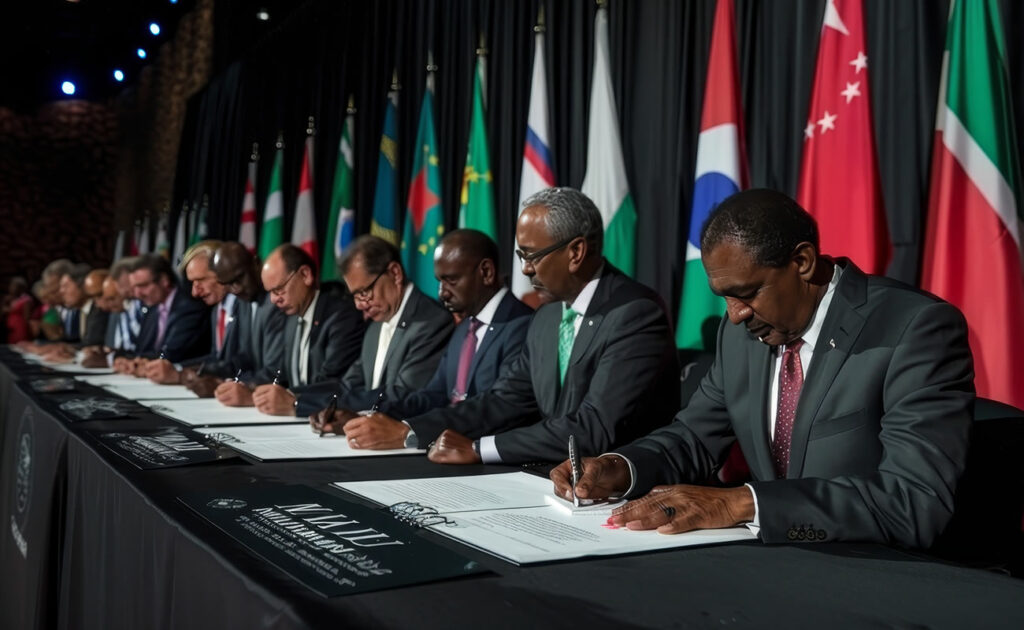
The Inter-Parliamentary Leadership Dialogue (IPLD) 2026 is set to be a distinguished, high-level international forum bringing together legislative leaders. Its purpose is to promote legislative diplomacy, ensure policy alignment, and foster strategic economic partnerships between Africa and Canada. The platform provides an essential space where Speakers, Committee Chairs, Clerks, and other senior parliamentarians not only engage in dialogue but also help shape future legislative initiatives that boost trade, investment, and sustainable development in both regions. Founded on a shared commitment to governance excellence and institutional integrity, the Dialogue turns parliamentary collaboration into a powerful catalyst for economic progress and global cooperation.
The IPLD 2026 not only provides a platform for gathering but also demonstrates a strong dedication to building lasting inter-parliamentary partnerships and developing practical policy responses that go beyond traditional diplomacy. Its aim is to inspire a new generation of legislative leaders who are responsive, innovative, and globally aware, capable of aligning national interests with emerging international opportunities. By promoting closer cooperation between African and Canadian parliaments, the Dialogue acts as a strategic driver for inclusive growth, resilient economies, and a rules-based global system. Ultimately, it aims to transform how legislative bodies collaborate to shape the future of international trade and development.
This Dialogue brings together:
- Speakers and Deputy Speakers
- Committee and Sub-Committee Chairmen
- Clerks and Parliamentary Secretaries
- Senior legislative and policy actors
The IPLD is uniquely equipped to connect policy, governance, and investment systems, synchronizing legislative frameworks to speed up:
- Trade and export growth
- Foreign direct investment (FDI)
- Infrastructure development
- Sustainable economic transformation
STRATEGIC CONTEXT
Global economic and geopolitical realities necessitate enhanced legislative collaboration. The growth of Africa through the AfCFTA framework and Canada’s strategic position—CA-ECS as a pivotal global investment and trade partner—offer a timely opportunity for institutional alignment.
Parliaments are central to:
- Ratifying trade agreements
- Enacting investment laws
- Providing oversight for national development
- Safeguarding democratic governance
The IPLD meets this need by establishing a structured parliamentary diplomacy system.
JUSTIFICATION
The Inter-Parliamentary Leadership Dialogue is justified by the increasing need for stronger legislative collaboration between Africa and Canada, aimed at tackling complex challenges in economics, governance, and development today. It serves as a strategic forum for parliamentary leaders to foster trust, align goals, exchange solutions, and turn legislative diplomacy into tangible results that promote trade, investment, democratic governance, and sustainable development within the African Continental Free Trade Area (AfCFTA) and the Canada–Africa Economic Cooperation Strategy (CA-ECS).
Why IPLD 2026?
- Rising demand for legislative-led trade diplomacy
- Need for unified policy frameworks
- Growing significance of committee-level collaboration
- Urgency for inclusive, sustainable development policies
Strategic Value
- Strengthens Africa–Canada bilateral and multilateral relations
- Supports evidence-based legislative decisions
- Enhances the institutional capacity of parliaments
Vision
Aim to create a globally recognized platform for legislative diplomacy and economic transformation.
Mission
To promote collaborative parliamentary efforts that advance trade, investment, governance, and sustainable development.
Core Objectives
- Enhance cooperation between parliaments
- Promote alignment of trade and investment policies
- Improve legislative oversight and governance.
- Facilitate institutional partnerships at the committee level
STRATEGIC PILLARS
- Legislative Diplomacy
- Trade & Investment Policy Alignment
- Finance and Budget
- Energy and Natural Resources
- Governance & Accountability
- Infrastructure & Development
- Sustainability & Climate Action
- Innovation & Digital Economy
EXPECTED OUTCOMES & IMPACT
- Bilateral and multilateral parliamentary agreements
- Establishment of Joint Parliamentary Committees
- Increased FDI and trade flows
- Strengthened institutional governance frameworks
- Enhanced policy harmonization across sectors
INSTITUTIONAL FRAMEWORK
- Governance Structure
- Steering Committee
- Program Advisory Council
- Parliamentary Liaison Committee
- Secretariat
METHODOLOGY & PROCESS DESIGN
- Engagement Model
- Plenary Sessions
- Thematic Panels
- Executive Boardroom Sessions
- Committee Dialogues
- Networking Platforms
Approach
- Evidence-based policy discussions
- Comparative legislative analysis
- Outcome-driven deliberations
PROGRAMME ARCHITECTURE
This framework is designed as a strategic, results-driven guide that helps participants move from dialogue to action. It includes high-level plenaries, thematic leadership sessions, committee dialogues, technical workshops, bilateral meetings, and investment missions. Together, these components will gradually turn shared ideas into tangible results. Each part aims to produce clear resolutions, policy frameworks, partnerships, and implementation plans, positioning African and Canadian parliamentarians as collaborative architects of enhanced legislative cooperation, sustainable development, and inclusive economic growth.
The IPLD is structured into:
- Opening Plenary
- Keynote Sessions
- 8 High-Level Panels
- Boardroom Dialogues
- Networking Engagements
DETAILED PROGRAMME SCHEDULE
Time Activity | Time Activity |
08:00 – 09:00 Registration | 08:00 – 09:00 Registration |
09:00 – 10:00 Opening Ceremony | 09:00 – 10:00 Opening Ceremony |
10:00 – 11:00 Keynote Addresses | 10:00 – 11:00 Keynote Addresses |
11:00 – 16:30 Panel Sessions (with breaks) | 11:00 – 16:30 Panel Sessions (with breaks) |
16:30 – 18:00 Boardroom Sessions | 16:30 – 18:00 Boardroom Sessions |
19:00 – 21:30 Dinner Networking | 19:00 – 21:30 Dinner Networking |
KEYNOTE SPEAKERS
- Speakers, Parliament of Canada (Senate & House of Commons)
- President, Pan-African Parliament
- African National Assembly Speakers (2)
- AU Commissioner for Political Affairs, Peace and Security
- Canadian Minister of International Trade
- AU Commissioner for Trade & Industry
HIGH-LEVEL PANEL SESSIONS
PANEL 1: Trade Policy, Export-Import & Market Access
Title: “Repositioning Africa–Canada trade relations: Legislative Strategies for Enhancing Market Access, Boosting Exports, and Improving Trade Competitiveness.”
Strategic Context
The global trade system is experiencing a major shift, driven by regional trade groups, geopolitical changes, and advancements in digital commerce. Africa’s adoption of the AfCFTA marks a historic milestone in regional integration, while Canada continues to expand its international trade presence through diverse partnerships.
Despite differences in legislative frameworks, regulatory systems, and export preparedness among African economies, these factors limit their full participation in global trade. This panel seeks to promote legislative harmonization and align trade policies between African parliaments and those of Canada.
Key Policy Challenges
- Ongoing tariff and non-tariff barriers
- Fragile export infrastructure and logistics networks.
- Exports offer limited value addition.
- Regulatory inconsistencies observed across different African markets.
- Restricted access to trade finance.
- Barriers to entering the North American market
Legislative and Institutional Gaps
- Lack of unified trade laws
- Limited congressional oversight of trade agreements
- Weak legal frameworks hinder the growth of digital and services trade.
- Restricted legislation supporting export promotion.
Strategic Opportunities
- Aligning AfCFTA with CA-ECS trade frameworks
- Frameworks for joint export development
- Reforms aimed at simplifying and streamlining trade processes.
- Strengthening parliamentary capacity
Core Discussion Areas
- Harmonizing legislation to streamline trade processes
- Export competitiveness and diversification
- Parliamentary oversight of trade negotiations
- Market access policies
Panel Composition
Moderator: Chair, International Trade Committee (Canada)
Panelists:
- Chair, Trade Committee – Nigeria
- Chair, Commerce Committee – Kenya
- Canadian Trade Policy Expert
- African Export Promotion Authority Representative
- Private Sector Trade Specialist
- Multilateral Trade Organization Representative
Expected Outcomes
- Africa–Canada Trade Legislative Cooperation Framework
- Export Policy Reform Roadmap
- Strategy for reducing trade barriers
Recommended Interventions
- Joint Parliamentary Trade Taskforce
- Model trade legislation templates
- Annual Trade Policy Review Mechanism
Executive Boardroom Follow-Up
Focus on:
- Trade law harmonization
- Export financing frameworks
- Customs and regulatory alignment
PANEL 2: Foreign Direct Investment & Fiscal Governance
Title: “Boosting Investment Flows with Legislative Certainty, Fiscal Discipline, and Institutional Transparency”
Strategic Context
FDI is crucial for economic transformation; however, Africa continues to encounter investment challenges stemming from unpredictable policies and fragile fiscal governance. At the same time, Canada’s institutional investors possess substantial capital, contingent on stable and transparent regulatory environments.
Key Challenges
- Investor risk perception
- Policy inconsistencies
- Weak fiscal accountability
- Limited PPP frameworks
Legislative Gaps
- Weak investor protection laws
- Limited frameworks for fiscal responsibility.
- Insufficient budget oversight
Strategic Opportunities
- Enhancing PPP legislation
- Improving financial openness
- Attracting investment from institutions
Core Discussion Areas
- Frameworks for investment protection
- Reforms in fiscal governance
- Government backing for PPPs
Panel Composition
Moderator: Chair, Finance Committee (Canada)
Panelists:
- Chair, Finance Committee – Ghana
- Investment Promotion Agency
- Canadian Institutional Investor
- Development Finance Expert
Expected Outcomes
- Model FDI legislative framework
- Fiscal Governance Reform Roadmap
Recommended Interventions
- Joint FDI legislative platform
- Fiscal transparency frameworks
- PPP policy harmonization
Boardroom Focus
- Investment laws
- Fiscal accountability systems
- PPP agreements
PANEL 3: National Security, Defence & Strategic Infrastructure
Title: “Legislative Oversight in National Security, Defense Governance, and Critical Infrastructure Protection”
Strategic Context
Security threats such as cyber risks, terrorism, and infrastructure vulnerabilities demand strong legislative oversight and coordinated policy approaches.
Key Challenges
- Weak defense oversight
- Infrastructure vulnerabilities
- Cybersecurity gaps
Legislative Gaps
- Weak security laws
- Weak oversight mechanism
- Limited Cyber Laws
Opportunities
- Enhancing defense governance
- Frameworks for infrastructure protection
- Cybersecurity legislation
Discussion Areas
- Defence oversight models
- Infrastructure security laws
- Cyber resilience
Panel Composition
Moderator: Chair, Defence Committee (Canada)
Panelists:
- Defence Committee Chair – South Africa
- Security Expert
- Infrastructure Protection Specialist
Outcomes
- Security legislative framework
- Infrastructure protection roadmap
Interventions
- Joint defence oversight platform
- Cybersecurity policy frameworks
Boardroom Focus
- Defence budgets
- Infrastructure risk management
PANEL 4: Transport, Housing & Infrastructure Development
Title: “Legislation for Sustainable Infrastructure, Urban Growth, and Economic Links”
Strategic Context
Infrastructure deficits continue to pose major challenges to economic growth in Africa, particularly in transportation and housing sectors.
Challenges
- Infrastructure Financing Gaps
- Urban Housing Shortages
- Fragile PPP Frameworks
Legislative Gaps
- Weak Infrastructure legislation
- Restrictive urban planning frameworks
Opportunities
- PPP development
- Infrastructure investment frameworks
Discussion Areas
- Infrastructure financing
- Urban housing policies
Panel Composition
Moderator: Infrastructure Committee Chair
Panelists:
- Works Committee Chair – Nigeria
- Canadian Infrastructure Expert
- PPP Specialist
Outcomes
- Infrastructure policy framework
- Housing legislative roadmap
Interventions
- PPP policy development
- Infrastructure financing models
Boardroom Focus
- Project financing
- Infrastructure partnerships
PANEL 5: Climate, Energy, and Natural Resources
Title: “Advancing Energy Transition, Climate Resilience, and Sustainable Resource Management”
Strategic Context
Climate change and energy transition are global priorities that require strong legislative backing.
Challenges
- Climate financing gaps
- Energy transition barriers
- Resource mismanagement
Legislative Gaps
- Weak environmental laws undermine effective protection and enforcement.
- Limited policies supporting renewable energy development.
Opportunities
- Renewable energy investment
- Climate finance frameworks
Discussion Areas
- Climate legislation
- Energy policy reforms
Panel Composition
Moderator: Environment Committee Chair
Panelists:
- Energy Committee Chair – Egypt
- Climate Finance Expert
- Renewable Energy Investor
Outcomes
- Climate policy framework
- Energy transition roadmap
Interventions
- Renewable energy legislation
- Climate financing models
Boardroom Focus
- Energy policy alignment
- Climate financing
PANEL 6: Agriculture, Food Security & Rural Development
Title: “Enhancing Food Systems and Agro-Industrial Development Through Legislative Innovation”
Strategic Context
Agriculture remains the backbone of Africa’s economy; however, it is challenged by low productivity and underdeveloped value chains.
Challenges
- Food insecurity
- Weak agricultural systems
Legislative Gaps
- Weak agricultural policies
- Limited agro-industrial regulations
Opportunities
- Development of agro-processing industries.
- Food security frameworks
Discussion Areas
- Agricultural reforms
- Strengthening food systems
Panel Composition
Moderator: Agriculture Committee Chair
Panelists:
- Agriculture Committee Chair – Ethiopia
- Agribusiness Leader
- Food Policy Expert
Outcomes
- Framework for agricultural investment.
- Food Security Roadmap
Interventions
- Agro-industrial policies
- Frameworks for rural development
Boardroom Focus
- Agricultural financing
- Value chain development
PANEL 7: Governance, Human Rights & Legislative Oversight
Title: “Strengthening Democratic Governance with a Focus on Parliamentary Accountability and Human Rights Protection”
Strategic Context
Strong governance and human rights frameworks are crucial for sustainable and inclusive global development. Smart investments in these areas help build stability, fairness, and a better future for everyone.
Challenges
- Corruption
- Weak oversight
Legislative Gaps
- Weak accountability frameworks undermine responsibility and transparency within organizations.
- Limited enforcement can hinder rule compliance, but teamwork and creativity help find better ways to support compliance and stakeholders.
Opportunities
- Enhancing democratic institutions
- Improving clarity and openness.
Discussion Areas
- Oversight mechanisms
- Human rights frameworks
Panel Composition
Moderator: Governance Committee Chair
Panelists:
- Public Accounts Chair – Kenya
- Human Rights Expert
- Civil Society Representative
Outcomes
- Governance reform structure
- Oversight strategy
Interventions
- Anti-corruption legislation
- Transparency mechanisms
Boardroom Focus
- Oversight enforcement
- Institutional reforms
PANEL 8: Technology, Innovation & Digital Economy
Title: “Advancing digital transformation and innovation through evolving legislative frameworks.”
Strategic Context
The digital economy acts as a major driver of global growth, requiring the creation of future-oriented legislative frameworks.
Challenges
- Digital divide
- Unclear or ineffective technology policies
Legislative Gaps
- Limited regulations regarding data protection.
- Limited innovation frameworks that hinder progress.
Opportunities
- Digital trade (interactions between the AfCFTA and the CA-ECS)
- Framework for E-Commerce Harmonization and Inter-Regional Market Intelligence
- Innovation ecosystems
Discussion Areas
- Digital governance
- Tech investment
Panel Composition
Moderator: Technology Committee Chair
Panelists:
- ICT Committee Chair – Rwanda
- Tech Industry Leader
- Digital Policy Expert
Outcomes
- Digital policy framework
- Innovation Roadmap
Interventions
- Data governance regulations
- Support for the technology ecosystem
Boardroom Focus
- Align digital policies effectively.
- Innovation partnerships
PANEL 9: Banking, Commerce, Budgets & Finance
Title: “Enhancing financial systems, legislative budgeting, and commercial governance to support sustainable economic growth.”
Strategic Context
The strength and resilience of a modern economy largely rely on its banking systems, regulatory frameworks, fiscal discipline, and governance. In Africa, while financial systems are rapidly evolving, they remain constrained by fragmented regulations, restricted access to capital, and inadequate oversight of financial institutions.
Canada, meanwhile, has a highly stable and well-regulated banking system, backed by strong parliamentary oversight, solid fiscal policies, and clear budget procedures.
This panel seeks to establish a strategic legislative connection between African and Canadian parliamentary institutions to enhance:
- Financial Sector Resilience
- Budget Credibility and Transparency
- Commercial Law Harmonization
- Investment-Friendly Financial Ecosystems
Key Policy Challenges
- Restricted credit availability for SMEs and emerging sectors.
- Weak enforcement of banking regulations in certain jurisdictions
- Budget inefficiencies and fiscal leakages
- Insufficient legislative oversight of national budgets
- Fragmented commercial laws impact cross-border trade
- Increasing public debt is occurring without adequate legislative accountability.
Legislative and Institutional Gaps
- Weak oversight of central banks and regulators
- Lack of standardized commercial codes throughout African jurisdictions
- Restricted legal frameworks for fintech, digital banking, and financial innovation.
- Insufficient fiscal responsibility laws
- Weak coordination between budgeting processes and national development plans.
Strategic Opportunities for Africa–Canada Cooperation
- Implementation of industry-leading standards in banking regulation and oversight.
- Enhancing parliamentary roles in budget creation and oversight
- Development of standardized commercial laws to facilitate trade and investment.
- Frameworks aimed at promoting financial inclusion and fostering fintech innovation.
- Partnerships in public financial management systems.
Core Discussion Areas
- How can parliaments enhance oversight of banks and financial regulators?
- What reforms are needed to enhance budget transparency, accountability, and efficiency?
- How can Africa adopt Canada’s financial governance approach to improve fiscal stability?
- What legislative frameworks are needed for fintech, digital banking, and financial inclusion?
- How can the harmonization of commercial laws support easier cross-border trade and investment?
Panel Composition
Moderator: Chair, Standing Committee on Finance (Canada)
Panelists:
- Chair, Senate Committee on Banking, Insurance & Financial Institutions – Nigeria
- Chair, Finance & Budget Committee – Kenya
- Senior Official, Bank of Canada
- Representative, African Development Finance Institution
- Canadian Pension Fund Executive
- Fintech Policy Expert (Africa)
- Representative, Ministry of Finance (African State)
- International Fiscal Governance Specialist
Expected Outcomes
- Creating a Model Parliamentary Framework for Financial Oversight
- Draft Africa–Canada Financial Governance Cooperation Charter
- Policy roadmap outlining budget transparency and fiscal discipline measures.
- Framework for unified commercial and banking laws
Recommended Interventions
- Formation of a Joint Parliamentary Committee on Banking and Fiscal Governance
- Annual Africa–Canada Budget Review Dialogue
- Development of Model Fiscal Responsibility Legislation
- Institutionalizing Parliamentary Budget Offices (PBOs) across African legislatures
- Promotion of policies that enhance digital financial inclusion.
Executive Boardroom Follow-Up
- Closed-door engagements between:
- Finance Committee Chairmen
- Banking and Commerce Committees
- Budget and Appropriations Committees
- Clerks and Legislative Finance Analysts
Focus:
- Budget cycle harmonization
- Financial oversight tools
- Debt management legislative frameworks
PANEL 10: National Economy, Audits & Oversight
Title: “Improving economic governance via parliamentary audits, oversight, and accountability mechanisms.”
Strategic Context
Effective economic governance requires not just solid policies but also robust accountability, auditing, and legislative oversight systems. In many regions, a notable gap exists between policy development and execution, primarily because of weak audit mechanisms and limited parliamentary enforcement power.
Canada’s model highlights the crucial role of independent audit institutions, parliamentary public accounts committees, and transparent reporting systems in ensuring fiscal discipline and supporting economic stability.
This panel aims to position the parliaments of Africa and Canada as key players in protecting their respective national economic stability through exemplary oversight.
Key Challenges
- Weak audit follow-up on public spending
- Limited autonomy of supreme audit institutions in certain jurisdictions.
- Ineffective mechanisms for parliamentary oversight.
- Audit reports that are delayed or incomplete.
- Lack of effective coordination between audit institutions and legislative committees.
- Discrepancies between national budgets and actual development results
Legislative and Institutional Gaps
- Limited legal support for audit institutions
- Limited enforcement power of Public Accounts Committees
- Lack of transparency in public financial reporting
- Lack of frameworks that audit based on performance metrics.
- Limited incorporation of audit findings into policy reforms.
Strategic Opportunities
- Enhancing Supreme Audit Institutions (SAIs) through legislative reforms
- Improving the Effectiveness of Public Accounts Committees (PACs)
- Implementation of real-time auditing and digital oversight solutions
- Promoting transparency and open government initiatives
- Enhancing the ability to conduct performance and value-for-money audits.
Core Discussion Areas
- What steps can parliaments take to enhance the independence and effectiveness of audits?
- What legislative reforms are necessary to strengthen Public Accounts Committees?
- How can audit findings be more effectively incorporated into policy and budget reforms?
- How can digital technologies improve oversight?
- How can Africa and Canada work together to strengthen accountability systems?
Panel Composition
Moderator: Chair, Public Accounts Committee (Canada)
Panelists:
- Chair, Public Accounts Committee – South Africa
- Auditor-General Representative (African State)
- Senior Official, Office of the Auditor General of Canada
- Governance and Transparency Expert
- Representative, African Supreme Audit Institution
- Parliamentary Oversight Specialist
- Development Partner (e.g., World Bank Governance Unit)
- Civil Society Transparency Advocate
Expected Outcomes
- Framework for enhancing parliamentary oversight systems
- Model legislation to promote audit independence and accountability
- Africa–Canada Audit and Oversight Collaboration Forum
- Guidelines for implementing performance-based auditing systems
Ambitious Interventions
- Creation of a Network for Inter-Parliamentary Audit and Oversight
- Creation of uniform audit reporting frameworks
- Capacity-building initiatives for Public Accounts Committees
- Implementation of digital audit tools alongside transparency platforms
- Establishment of mandatory mechanisms for audit follow-up.
Executive Boardroom Follow-Up
Participants:
- Public Accounts Committee Chairmen
- Audit Committee Members
- Clerks and Audit Advisors
Focus Areas:
- Audit enforcement mechanisms
- Legislative sanctions for non-compliance
- Enhancing collaboration between parliaments and audit institutions
Besides the main topics on panels 1 to 8, panels 9 and 10 together are central to the Inter-Parliamentary Leadership Dialogue’s emphasis on financial integrity and economic governance.
Together, they ensure that:
- Financial systems are robust and inclusive
- Budgets are transparent and accountable
- Public resources are efficiently utilized
- Oversight mechanisms are strong, independent, and effective
These panels will significantly influence the credibility, sustainability, and international competitiveness of Africa–Canada economic collaborations.
EXECUTIVE BOARDROOM ENGAGEMENTS
Closed-door engagements for:
- Committee Chairmen
- Sub-Committee Leaders
- Clerks
Purpose
- Policy negotiation
- Institutional agreements
- Technical collaboration
PARLIAMENTARY COMMITTEE ENGAGEMENT FRAMEWORK
African Delegation Leads
- Trade Committee Chair
- Finance Committee Chair
- Defence Committee Chair
- Infrastructure Committee Chair
- Clerk of Parliament
Canadian Counterparts Expectations
- Policy exchange
- Technical collaboration
- Legislative benchmarking
DINNER NETWORKING SESSION
Inter-Parliamentary Committee Leadership & Clerks Strategic Dinner is an informal yet strategic networking event that gathers Committee and Sub-Committee Chairmen along with their Clerks (Parliamentary Secretaries) from Africa and Canada. Held in a relaxed environment, its purpose is to enhance institutional relationships, foster trust, and promote open, solutions-focused conversations outside formal settings. This effort aims to promote collaboration between committees, increase legislative effectiveness, and develop practical partnerships that support ongoing policy coordination, effective oversight, and long-term inter-parliamentary collaboration.
Purpose
- Strengthen informal diplomacy efforts
- Build institutional partnerships
- Allow for direct collaboration.
Importance
- Builds trust beyond formal settings
- Facilitates committee partnerships
- Enhances legislative efficiency
DELEGATION STRUCTURE
Africa
- Speakers/Deputy Speakers
- Committee Chairmen
- Clerks
Canada
- Federal and Provincial Legislators (Domiciled in Ontario)
- Committee Leaders
- Policy Experts
LOGISTICS & PROTOCOLS
Logistics
- VIP transportation
- Accommodation
- Interpretation services
- Security
Protocol
- Diplomatic seating arrangements
- Order of precedence
- Official documentation
STAKEHOLDER MAPPING
- African Parliaments
- Canadian Parliament
- African and Canadian Parliamentary Institutions
- Development Partners
- Private Sector
- Academia
PROJECT GOALS
The IPLD 2026 functions as a groundbreaking legislative diplomacy platform, designed to promote:
- Economic growth
- Policy innovation
- Sustainable development
- Strategic Partnership
It symbolizes a strategic convergence of governance, trade, and international cooperation.